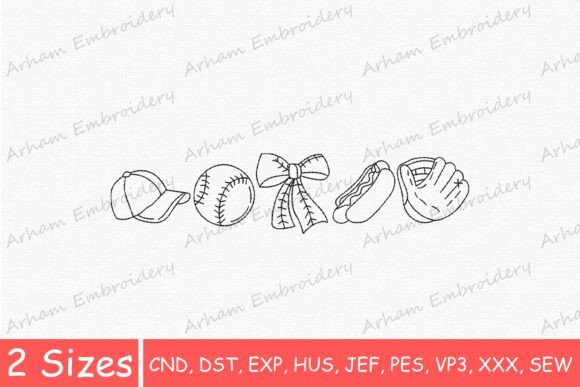
Baseball Sketch Elements, Sports Outline
First Impression: Modern, Playful, and Instantly Recognizable
As an embroidery designer who’s prepped over 200 craft fair booths—and shipped thousands of finished products—I opened Baseball Sketch Elements, Sports Outline expecting charm, not cliché. What landed was a confident, hand-drawn energy: loose linework, intentional imperfections, and zero clip-art stiffness. It reads as modern sketch, not vintage retro or cartoonish. That distinction matters on a crowded table. At 3 feet away, it catches eyes without shouting. It feels creative, not generic—ideal for buyers seeking handmade authenticity over mass-produced sports gear.
Where It Shines: Craft Fair Product Realities
This isn’t just another baseball design—it’s a versatile machine embroidery design built for real-world selling:
- Tote bag design: Works brilliantly centered on natural canvas or denim. The sketch style softens the sporty theme, making it appealing to non-fans (think teachers, librarians, parents). Large-scale placement reads clean from across the aisle.
- Apron embroidery: Perfect for left-chest placement. The organic lines complement artisanal kitchen aesthetics—no jarring contrast with linen or cotton duck fabric.
- Tea towel embroidery: Holds up beautifully on medium-weight flour-sack cotton. Avoid ultra-textured towels; stitch definition stays sharp where fabric is smooth.
- Embroidered patch: A standout. Clean outlines and open negative space mean crisp edges when heat-sealed or sewn-on. Ideal for backpacks, denim jackets, or kids’ gear.
- Caps and pouches: Use smaller elements (a single mitt or bat) rather than full compositions. Curved surfaces demand simplified versions—test before bulk hooping.
- Pillow covers & market bags: Scale confidently. The sketch aesthetic prevents visual heaviness—even large repeats feel light and intentional.
What Makes It Sell Online and In-Person
Baseball Sketch Elements, Sports Outline thrives where attention spans are short and quality expectations are high. Its hand-drawn nature signals handmade product instantly—no explanation needed. On Etsy listings, it photographs cleanly against neutral backdrops. Light shadowing in mockups enhances depth without distracting. As a digital embroidery file, it invites customization: swap thread colors for team palettes, layer with monograms, or pair with handwritten text for personalized gifts.
For small shop owners, this design supports batch production without fatigue. Repetition feels fresh because each element has subtle variation—no robotic uniformity. Buyers notice that difference. It elevates perceived value: a $28 embroidered tote doesn’t feel like “just a bag”—it feels like a collectible piece.
Practical Production Notes Every Embroiderer Should Know
Before you load your hoop, pause. Here’s what I checked—and what you should too:
- Test on scrap fabric first. Especially with textured tea towels or thick twill caps—stitch density can lift or blur if stabilizer choice is off.
- Confirm thread contrast. Light gray or navy works universally, but avoid pale yellow on cream linen—it fades visually. Dark thread on dark fabric? Add a white underlay or skip dense areas.
- Review spacing between elements. Tight clusters may require re-hooping on complex items like curved cap fronts. Break into modular components if needed.
- Hoop size matters. Most elements fit comfortably in a 4x4 hoop—but verify before cutting fabric. Oversized versions may need 5x7+ for clarity.
- Stabilizer strategy: Tear-away for stable cottons; cut-away for knits or stretchy pouch fabrics; heavy cut-away + topping for textured towels.
- Create at least one real mockup. A finished embroidered patch or tea towel tells you more than any screen preview. Does the sketch line hold weight? Does it read at arm’s length?
- Compare fabric colors side-by-side. A charcoal sketch pops on oatmeal linen but recedes on heather gray. Swatch before committing.
- Confirm commercial licensing. This is a commercial embroidery asset—but always double-check terms before selling finished products. Don’t assume resale rights.
Careful-Use Considerations: Protect Your Time and Reputation
Not every surface is forgiving. Avoid using Baseball Sketch Elements, Sports Outline full-size on:
- Dense stitch zones—if the file includes tight fill areas, reduce scale or simplify for dark fabrics where thread buildup shows.
- Tiny details or micro-lettering—if present in alternate versions, skip them for caps, patches under 2”, or coarse weaves. Clarity trumps completeness.
- Thick or napped fabrics—like fleece or heavy terry—unless you’re willing to adjust tension and use topping.
- Curved cap surfaces—stick to single-line elements (a glove outline, not a detailed ball) unless digitized specifically for headwear.
Why This Design Strengthens Your Booth—and Your Brand
In a sea of florals and quotes, Baseball Sketch Elements, Sports Outline adds smart thematic variety without alienating. It appeals to dads, coaches, PE teachers, youth league volunteers—and yes, even non-sports fans drawn to its artful looseness. Visually, it balances boldness and breathability: strong enough to anchor a display, light enough to pair with softer designs. For Etsy sellers, it’s a reliable small shop product—low competition, clear niche, high perceived craftsmanship.
Most importantly, it reflects well on you. Choosing thoughtful, well-executed design assets tells customers you care about integrity—not just output. When someone picks up your embroidered market bag and says, “This feels special,” that’s Baseball Sketch Elements, Sports Outline doing quiet, confident work.