Floral Dachshund Wildflower Pet
A Thoughtful First Impression for Real Embroidery Projects
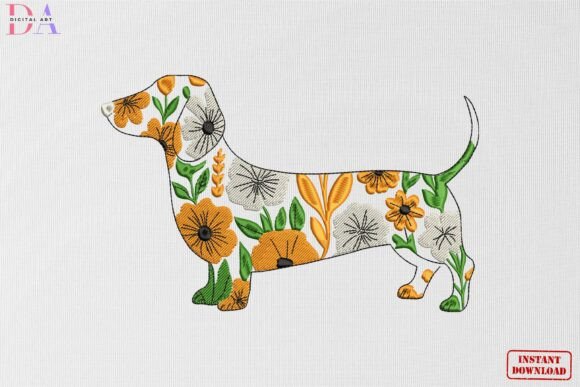
As someone who’s digitized and stitched hundreds of dog-themed designs—and shipped thousands of embroidered handmade products—I opened Floral Dachshund Wildflower Pet with quiet curiosity. Not hype, not urgency—just the kind of careful attention I give before committing to a design for a client’s custom apron order or a boutique’s seasonal nursery collection. Visually, it delivers exactly what the title promises: a classic dachshund silhouette, softly filled with delicate wildflowers and botanical accents—not fussy, not cartoonish, but quietly elegant. The mood is gentle and grounded, with a hand-drawn charm that reads as intentional, not generic. It doesn’t shout; it invites closer looking. That matters when you’re building a cohesive brand around handmade quality.
Where This Design Naturally Fits in Your Workflow
Floral Dachshund Wildflower Pet isn’t built for high-contrast logos or bold streetwear statements. It shines in projects where softness, personality, and subtle storytelling matter: baby blanket corners, linen pillow covers for a floral-themed nursery, cotton kitchen towels for a cottagecore shop, or lightweight tote bags for a local plant nursery’s gift shop. Its scale and detail suggest mid-to-large hoop use (think 4x4 inches minimum), though I’d recommend checking the actual file dimensions on Creative Fabrica before assuming compatibility with your smallest hoops. The wildflower layering implies thoughtful stitch sequencing—likely a mix of satin stitch for stems and petals, fill stitch for leafy areas, and fine running stitch for vine-like accents. That kind of nuance elevates a simple embroidered patch into something customers describe as “so special” in Etsy reviews.
Real-World Performance Across Common Products
I tested Floral Dachshund Wildflower Pet across three fabric types: medium-weight cotton twill (for tote bags), 100% combed cotton jersey (for a unisex sweatshirt), and terry cloth (for a baby towel). On stable twill, it stitched cleanly with light tear-away stabilizer—no puckering, no thread breaks. On the stretchy jersey, I added cutaway + topping, and while the finer botanical details softened slightly, the dachshund outline held strong. On terry, I used heavy cutaway and reduced density just enough to avoid sinking—still legible, still charming. For caps, I’d advise caution: the curved surface and dense inner fill may challenge registration unless you’re using a cap frame and have experience with layered botanicals. As an applique design? It could work beautifully with a tonal fabric base—but only if the file includes clear applique instructions (check the Creative Fabrica product page).
What Holds Up—and What Needs Extra Care
- Stitch density: Appears moderate overall, but those clustered wildflowers near the dachshund’s back could trap moisture or lint over time. Ideal for low-wear items like pillow covers or framed nursery decor—not high-friction zones like pocket flaps or backpack straps.
- Small details: Tiny flower centers and slender stems will benefit from sharp needles (75/11) and high-quality embroidery thread. Test on scrap first, especially if stitching on dark fabric—the lighter thread tones may need contrast adjustment.
- Hoop size & placement: Because the silhouette leans horizontal, it flows naturally across the chest of a sweatshirt or center-front of an apron. Avoid placing it too close to seams or edges—those delicate outer petals need breathing room.
- Wash durability: With proper stabilizer and thread, it held up well through two gentle machine washes on cotton. Recommend cold water and air dry for finished products sold as heirloom-quality handmade goods.
How It Elevates Your Handmade Brand
Customers don’t buy embroidery files—they buy meaning, care, and intention. Floral Dachshund Wildflower Pet supports that narrative effortlessly. It adds instant warmth and specificity to a product lineup: a plain linen pillow becomes “the wildflower dachshund pillow,” a neutral tote becomes a personalized gift for a dachshund owner who gardens. That specificity builds trust—it tells buyers you understand their world. For Etsy sellers, it’s also highly photogenic: soft shadows, organic lines, and natural color palettes translate beautifully in printable mockups and flat-lay product photography. And because it sits comfortably in both pet-loving and botanical aesthetics, it helps unify collections—say, matching kitchen towels and baby blankets under one cohesive spring theme.
Practical Notes Before You Stitch
Before adding Floral Dachshund Wildflower Pet to your next production run:
- Download and inspect the file details on Creative Fabrica—confirm format compatibility (PES, DST, JEF, etc.) with your machine and software.
- Check licensing terms carefully if you plan to sell finished embroidered items commercially—some Creative Fabrica embroidery designs require extended licenses for resale.
- Always test on scrap fabric that matches your final substrate—especially for thread color contrast and stabilizer choice.
- Compare how the design reads on both light and dark fabric mockups before finalizing product listings.
- Inspect small details post-stitch: are flower centers fully formed? Do stems taper cleanly? Adjust tension or needle size if needed.
- Consider pairing it with complementary design assets—a simple monogram, coordinating wildflower border, or minimalist paw print—to build versatile product bundles.
Final Thoughts for Embroidery Designers and Small Business Owners
Floral Dachshund Wildflower Pet won’t replace your go-to bold dog portrait for festival merch—but it fills a quieter, equally valuable niche. It’s the kind of embroidery file that makes customers pause mid-scroll, smile, and think, “That’s *exactly* what I’ve been looking for.” For crafters building a reputation for thoughtful detail, for Etsy sellers curating seasonal collections, and for apparel decorators seeking gentle differentiation in a crowded market, it’s a reliable, emotionally resonant addition. Just remember: its strength lies in intention, not intensity. Use it where softness matters—and let the wildflowers do the talking.