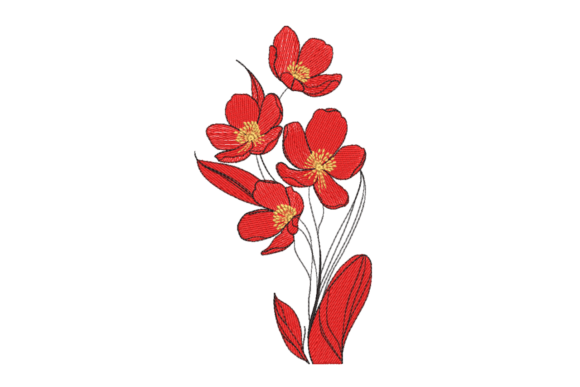
Red Wildflower
A Bold Choice for Craft Fair Success
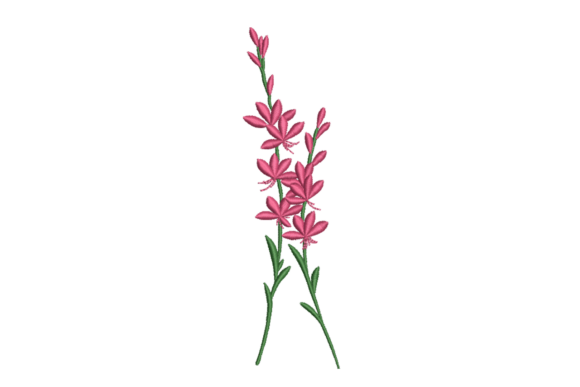
The first thing that catches the eye about Red Wildflower is its striking color and floral composition. It feels bold, farmhouse, and a touch of rustic charm. The red hue immediately commands attention, making it stand out in a sea of neutral or pastel designs. As an embroidery designer, I see great potential in this design for both craft fair products and handmade product displays.
Design Appeal and Market Fit
Red Wildflower has a natural flow that works well across various embroidery file applications. Its wildflower motif is versatile enough to be used as a small accent or a large focal point. This makes it suitable for everything from embroidered patches to pillow covers and tote bags. It carries a premium feel, which aligns well with Wedding Flowers themes often sought after at craft fairs and handmade markets.
As a machine embroidery design, Red Wildflower offers a good balance between detail and simplicity. It’s not overly complicated, which is a big plus when considering production speed and consistency. The floral elements are spaced well, allowing for easy interpretation by both experienced and novice embroiderers.
Product Performance and Visual Impact
When applied to teatowel embroidery, apron embroidery, and tote bag design, Red Wildflower looks vibrant and fresh. The red flowers pop against white or light-colored fabrics, creating a strong visual contrast. This makes it ideal for small shop product lines looking to attract buyers who appreciate clean, modern aesthetics.
On caps and market bags, the design maintains clarity even at smaller sizes. However, it's worth noting that dense stitch areas might become less visible on textured fabrics like cotton towels. For such applications, using a stabilizer and checking thread contrast can help maintain design integrity.
Selling Points and Practical Considerations
Red Wildflower is a great candidate for commercial embroidery and digital embroidery file use. It translates well into printable mockups and Etsy listings, offering a clear visual for potential buyers. The design is also repeatable, which is a major advantage for batch production and maintaining brand consistency.
For handmade product creators, it's important to test the design on scrap fabric before proceeding with larger orders. Checking thread colors, hoop size, and stitch density will ensure that the final finished product meets quality standards. Additionally, confirming the appropriate design assets and commercial licensing is crucial before selling the design commercially.
Booth Display and Customer Engagement
In a booth setting, Red Wildflower can serve as a standout piece. Its boldness makes it easily noticeable from a distance, which is key for drawing customer attention. When displayed alongside other craft fair products, it can act as a focal point, encouraging buyers to explore more items.
It also works well as a booth sample or handmade gift. The design’s simplicity allows for easy customization, which can help create a unique offering for each buyer. Whether it's a pillow cover, a patch, or a small pouch, Red Wildflower maintains its appeal without losing its essence.
Design Notes for Embroidery Designers
As an embroidery business owner, I recommend testing Red Wildflower on different fabric types to assess how it performs on dark fabric, textured towels, and curved cap surfaces. Ensuring that the design remains legible at smaller sizes is essential, especially for printable mockup purposes.
Also, consider the practicality of the design for small shop product lines. While Red Wildflower is visually appealing, it may require some adjustments for specific fabric types or commercial embroidery needs. Always review spacing, stitch density, and stabilizer use to achieve the best results.
Finally, remember to create at least one real finished product before mass production. This helps identify any potential issues and ensures that your Etsy seller or small shop product line maintains high quality and customer satisfaction.